Project Victor Learning Hub
Menu
Get Certified

Project Management in Thailand


Project Management in Thailand is still in its infancy!

This was the headline of an article published in an earlier edition of a special report on project management across the Asia Pacific. Few companies in Thailand recognize the importance of a centralized Project Management Office (PMO) managing and controlling project-related activities. Given the size of Thai companies and their limited project portfolios, existing functional departments separately handle project management activities without any centralized standard for management or control. This also leads to reduced authority and influence for the assigned project manager. While introducing a PMO within Thai companies is crucial, adapting standard processes and practices should consider differing customs, business practices, organizational cultures, and relationships that exist among project stakeholders.

PMI Association Thailand Chapter

Before we delve into project management and specifically its application in the context of the Thai industry, it is noteworthy to mention any study conducted on project management in western societies may have limited significance in a country where business structures, customs, and cultures differ. Many researchers stress the need to conduct research on how management techniques, practices, and models differ across national boundaries. Put differently, any “recipe for appropriate project management techniques” in a western culture may not necessarily apply in an eastern culture or among stakeholders with varying cultures. Having said that, all recommendations in this article are derived from experience and call for further scientific research for confirmation.

A Conflict Prevention Technique

Expatriate Project Managers should focus on reducing conflicts. Many Thai managers (with international exposure) perceive expat PMs as wanting to force down external business practices onto their environments. This belief, if misinterpreted, can further propagate to local subordinates leading to unnecessary communication barriers. Expat PMs should make sure stakeholders and specifically functional managers have mutual understanding of project expectations to prevent conflicts. Meeting with local managers regularly provides assurance that their comments are valid and their experience is valuable. Expat PMs should emphasize the role of the local team as the primary driver for project success.

Working ‘Together’

In the Thai community, functional managers become quite acquainted with their subordinates. They do so by organizing social activities such as joint meals, social outings and workshops, and other team building activities. This surely helps build a spirit of collaboration within the firm. Expat PMs working on Thai projects should do their best to join, where possible and when invited, locals in such activities. This will also help the locals learn about the project manager in a non-working environment, which helps build ‘relationships’ and underscores the prevailing culture.

Dealing with ‘Change’

As with every project, changes are bound to happen. Such changes may lead to budget overruns and schedule delays. Naturally, PMs are expected to control such changes specifically during the execution phase. Following a standard project management methodology, a Project Manager establishes a Change Control Board (CCB) at the onset of the project to deal with change requests. There are times when local customer requests for changes are declined without adequate explanation.

Given the context of the Thai environment, it is crucial that all stakeholders involved are familiar with ‘Change Control’. Senior Managers may at times request changes in key product features verbally without any written notice. By declining such requests without adequate explanation, a foreign project manager may offend the customer. Even when the Project Manager knows the request is beyond project scope, it is important they accept the request, put in written form, and ask the customer to sign it off before processing it through change control. After careful consideration by the CCB, the Project Manager should visit with the customer and kindly explain the result. Remember, the word “NO” does not fit within the Thai context; rather, the response should always be – “let’s see what we can do to help you. We will do our best.”
PMBOKv5 in Thai – Translated by PMI Association Thailand Chapter

PMBOKv5 in Thai – Translated by PMI Association Thailand Chapter

Go to See Them Physically!

Sometimes one wonders if e-mail is the ONLY tool a project manager uses. In the Thai context and specifically when dealing with ‘seniors’, it is important that expat PMs underscore ‘physical’ meetings. It is not uncommon for a PM to send a written request to a local manager without receiving any acknowledgement or response to it. Go to see them! This adds value and is a good sign of respect to ‘authority’.

While it is crucial to introduce standard PM processes and standards into Thai companies, it is more important that PMs contextualize the application of these principles given the varying culture, business structures, and practices

[wooma-template id=”2709″]

Why should a Project Manager get certified?


Why should a Project Manager get certified?

I’ve been managing projects for the larger part of my career and I’d never had to worry about any Project Management certification – one might say. Why should I get certified and how is obtaining a Project Management Professional (PMP) certification going to help me or my career? Many project managers ask these questions as they struggle to decide whether they should invest the extra time required to earn their PMP.

Can a Non-Certified Project Manager Manage Projects Successfully?

It’s true that one can manage a project to success without learning or adopting acceptable standards in Project Management such as the one recommended by the Project Management Body of Knowledge (introduced by the Project Management Institute, PMI). Project Managers who have managed many projects over the years learn enough from failures and issues encountered on projects that help them better plan and anticipate risks. They apply all basic principles identified in a Project Management discipline without recognizing such standard exists and has been documented by Project Management experts around the world. Yes experienced project managers may not need a certification in project management to help them manage a project to success but they do need some for of recognition. Such recognition can be obtained by having a standard project management body review such project manager experience and profile and by passing a certification exam that confirms the Project Manager understanding of basic project management principles and methodologies.



A Project Manager should not stand alone. Project Managers can now belong to a community of management practitioners in similar industries that share experiences and knowledge in their areas of practice – known as Communities of Practice introduced by PMI and managed by a group of industry experts. Project Managers retain knowledge earned and reinforce experiences learned by sharing them in such communities and by learning from other experts in similar fields.

Should a Project Manager get certified? Yes they should. And they should continue to learn by sharing experiences and networking among project management professionals in their local PMI Chapter (see Project Management Association Thailand Chapter). Get your certification and advance your career by learning from experienced Project Managers in your industry. Start today – it’s never too late!

[wooma-template id=”2709″]

Thailand Speeds Up Project Implementation


Thailand Speeds Up Project Implementation

Thailand government plans to speed up the implementation of eight projects under the Public-Private Partnership (PPP) program. The projects are worth upwards of 347 billion Thai baht and the plan is to shorten the overall duration of the projects from twenty-two months to nine months only. The projects include:

  • MRTA Pink Line
  • MRTA Yellow Line
  • MRTA Blue Line (Bang Sue-Tha Phra)
  • Bang Pa-in-Nakhon Ratchasima motorway
  • Bang Yai-Kanchanaburi motorway
  • Garbage Disposal Plant in Nonthaburi
  • Garbage Facilities in Nahkon Ratchasima
  • Marine Commerce Center

The Thai government may also include two high-speed train routes worth 246 billion baht in this “fast-track”program. More than 20 additional projects worth 1.79 trillion baht may also be included for implementation within 2017.

Thailand infrastructure investment continues to grow as the government aims to boost its sluggish economy after a slow-down in its private consumption and exports.

Source: Bangkokpost
Date: November 4, 2015

[wooma-template id=”2709″]

Thailand Transportation Infrastructure Projects (2014 – 2022)


Thailand Transportation Infrastructure Projects (2014 – 2022)

Since 2014, Thailand has proceeded with an 8-year plan to develop the country’s Transportation Infrastructure by integrating all platforms – rail, air, road, and water. This will ultimately turn the country into a logistics hub within the Asean Economic Community (AEC). The plan is to initially focus on the country’s internal rail infrastructure where it plans to develop 10 rail routes within Bangkok and the Metropolitan area within 2019, and the value of such projects is valued at 700 Billion THB.

The intention is to add support and provide more options for commuters to travel back and forth between the central business district and the neighbouring suburbs. This will eventually help reduce traffic congestion within the city and provide more opportunities for investment and expansion on the outskirts.

The second phase of the infrastructure transportation development plan is to focus on expanding the country’s wider transportation system and link Thailand with neighboring AEC countries by rail utilizing a double-track system. Investment in such projects has already commenced with a 2021 target completion date.

While such infrastructure development program presents many opportunities for Thailand’s development on the long run, the challenges for such implementation can and should not be ignored. Many of the projects included in this program will not include clear and concise requirements and with a lack of adequate costing and planning, many international or local investors rush to grab such investment opportunities while ignoring all potential risks involved. Potential investors should carefully engage their skilled program managers, project managers, engineers, and other resources to carefully review Terms of Reference (TORs) and document any unknown requirements, risks, questions, gaps, and present such information to Project Sponsors. Project managers should also conduct Quantitative Risk Analysis on the costs and schedules involved in such projects. This helps better explain the Net Present Value for such investments to Project Sponsors and Project Owners while taking into consideration high-priority risks identified.

By engaging an adequate Project Management Consultancy (PMC), Project Sponsors receive a better picture of the projects they intend to bid on and should help ensure adequate returns on their investments.

[wooma-template id=”2709″]

Top Five Project Management Pitfalls


Top Five Project Management Pitfalls

Project Management is one significant underestimated area that often goes unnoticed across many industries. Many companies introduce it as a process for compliance purposes only. It is also primarily introduced to make the “company” look good and attractive to investors – nothing more and nothing less. Few companies, however, adopt standard methodologies as they take on contracts. Project Management Pitfalls Here are the top five project management pitfalls an organization should consider as they deliver projects:

Pitfall 1 – Assuming a good technical engineer is capable of managing and leading teams:

Beware the “halo effect” – a famous statement made when discussing human resource management. It simply implies that sponsors sometimes assume that any good technical manager is capable of leading a team to deliver contracts. They assume their technical ability is enough for them to deliver. They simply can’t see that project management is not something that managers inherit or acquire by accident. They fail to see that it requires years of experience as well as a special skill set that one does not simply and accidentally acquire as they get involved with projects at technical or managerial levels.

Pitfall 2 – Planning for the sake of planning only:

Project managers plan their deliveries – that’s really the crux of project management. Unless they plan well, their deliveries are definitely destined to potential failure. They plan for costs, quality, human resources, procurements, and risks. Project managers then share these plans with all project stakeholders. Unless the sponsor and key stakeholders value the need for “proper” project management, these plans are just discarded. The manager may get an acknowledgement email such as the famous response one gets on many projects that goes as such: “Noted with thanks”. When the project manager tries to follow and execute the plan, however, they don’t really get any support from the team neither from any of the key stakeholders. Planning really becomes more of an exercise for the responsible manager to become “very” familiar with the project scope.

Pitfall 3 – Involving and assigning a project manager after signing the contract:

Companies surely need an aggressive business strategy and they surely need motivated and sales staff that are “self-driven” to capture business contracts. In the process of securing such contracts, they fail to recognize the need to involve project managers. Project managers specialize in areas of scope, schedule, and overall delivery. Involving them early on helps provide valuable advice as to whether the contract is risky, doable, or whether there are any significant issues that need further discussion. Regretfully some sales managers intentionally exclude project managers from pre-project meetings because they feel that may jeopardize their chances of securing the contract. After all such managers are not really interested in the overall company strategy. They are rather focused on self-interest and fail to see (sometimes intentionally) how the project contributes to the overall company strategy.

Pitfall 4 – Assessing the project scope after signing the contract:

In their urge to secure large contracts, many companies agree to sign fixed-price contracts without a clear description of the scope involved in doing the project. They assume the large revenue obtained from such contracts should surely be enough to cover the scope and they assume the technical team should definitely be capable of handing the situation. After signing a contract, they assign a project manager to check the technical requirements and check the scope with the customer and they expect things should turn out as expected.

Pitfall 5 – Executing projects with whatever skill set is available:

In their bid to decrease costs, many companies assign unqualified staff to deal with projects that go beyond their resource skill set. For example, sponsors sometimes assume an IT professional should definitely be capable of dealing with network requirements, system administration requirements, database issues, Enterprise Resource Planning (ERP) implementations, or any other business intelligence solution. They fail to see that each of these areas requires a defined skill set that is not easily acquired by any IT professional. It would rather take years of experience before any professional becomes capable of handling these varied application areas.

[wooma-template id=”2709″]

Top Five Reasons to Be PMP Certified


Top Five Reasons to Be PMP Certified

Project Managers in Thailand are beginning to recognize the value of obtaining a Project Management Professional (PMP) certification. If you are a Project Manager, Project Coordinator, or engineer and are considering to earn your PMP certification, here are Top Five Reasons to Be PMP Certified.

Get a world-renowned Project Management Organization to endorse your Skills and experience

PMI (Project Management Institute) is a renowned non-profit organization established more than 40 years ago, which focuses on the publication of project management standards including the Project Management Body of Knowledge (PMBOK) – Top Five Reasons To Be PMP Certifieda leading standard dealing with Project Management. Getting a PMP certification through PMI and having them endorse you as a successful Project Manager with more than 3 years experience adds a significant weight to your professional profile.

Stand out among the 1000s of Project Managers in Thailand without any PMP certification

Many Project Managers in Thailand come from the construction and engineering sectors. Many do not even know about the Project Management Institute (PMI) and many are not even familiar with the Project Management Professional (PMP) certification. It won’t be long before competing project managers (with PMI certifications) from the ASEAN Economic Community region (especially Singapore with more than 9000 PMP certificate holders) compete for jobs in similar industries in Thailand. Many companies are now bidding for large projects whereby project owners require project managers that are certified. With a PMP certification, Thai Project Managers will surely have an added advantage over their competing counterparts from other regions.

Expand your career potential by applying to multinational corporations who recognize your certification

Many multinational corporations in Thailand are seeking locally certified Project Managers as they expand their reach locally and internationally. Certified Thai Project Managers will have an added advantage as they are better able to compete for a position that requires working in diverse environments. Certified Thai Project Management Professionals are better communicators and are therefore preferably hired by multinational corporations seeking managers that can manage virtual teams.

Sharpen your project management knowledge

Thai Project Managers may have the minimum experience required to execute projects but have never actually gone through a formal training project management class. By seeking to obtain a PMP certification and by attending a 35 hour formal training class on project management, they are better equipped with tools and techniques that should help them deal with multi-million THB projects.

Improve your career outreach by networking with certified professionals in your industry

Thai Project Managers should join the local PMI Chapter and network with professionals in their industry and other industries. By joining the Chapter and participating in its training events and activities, and by networking with professionals in similar industries, certified Thai Project Management Professionals have better opportunities for career development and growth.

Project Victor Can Assist You!

Project Victor provides Project Management training and consulting services in Thailand. We are also happy to guide companies and/or individual professionals towards obtaining PMI’s professional credentials and certifications. For any inquires regarding our services, feel free to contact us.

[wooma-template id=”2709″]

What is the Project Management Institute?


What is the Project Management Institute?

The Project Management Institute, Inc. (PMI) is the project management industry’s non-profit standards body. PMI is the world’s largest not-for-profit membership association for the project management profession.

With over 250 project chapters and approximately 350,000 members worldwide, PMI is the largest project management membership group. PMI is a volunteer organization that supports and drives the project management industry forward – more information about PMI’s Thailand Chapter here.

PMI, in conjunction with its volunteer membership, developed A Guide to the Project Management Body of Knowledge (PMBOK® Guide), which is the agreed upon book of standard language, terminology and principles governing project management.

In the past, project managers ‘fell’ into the role. There was no formal degree or certification in project management. PMI has been instrumental in creating the Project Management Professional (PMP) certification, which professionalized the career of project management. Now, project managers worldwide study agreed upon principles and demonstrate required skills to earn and pass the PMP exam. The PMP certification is formalizing and validating the profession.

PMI currently offers the following credentials in Project Management:

Credentials:

  • Certified Associate in Project Management (CAPM)
  • Project Management Professional (PMP)
  • Program Management Professional (PgMP)
  • Portfolio Management Professional (PfMP)
  • PMI Agile Certified Practitioner (PMI-ACP)
  • PMI Risk Management Professional (PMI-RMP)
  • PMI Scheduling Professional (PMI-SP)
  • PMI Professional in Business Analysis (PMI-PBA)

More information about the PMI here.

[wooma-template id=”2709″]

PMI Updates the CAPM Exam


PMI Updates the CAPM Exam

About the CAPM Certification

Regardless of your career stage, the Certified Associate in Project Management (CAPM)® is an asset that will distinguish you in the job market and enhance your credibility and effectiveness working on — or with — project teams.

Organizations with standardized practices attain better results, as shown in our 2015 Pulse of the Profession® report. Because the CAPM® recognizes your knowledge of the profession’s preeminent global standard, you’ll stand out to employers and be poised to move ahead.

Project management is a rapidly growing profession. Research indicates that employers will need to fill nearly 2.2 million new project-oriented roles each year through 2027. With the CAPM, you’ll be on the fast track to opportunity.

PMI has released a new CAPM exam content outline. The exam, however, will be updated starting October 2022. The exam is changing to ensure it reflects market expectations of entry- and associate-level professionals. Extensive market research validated that today’s project team members work in a variety of environments and utilize different approaches. The new exam will test skills necessary to understand project management fundamentals as well as predictive, adaptive and business analysis principles.

Source: Certified Associate in Project Management (CAPM)®


[wooma-template id=”2709″]

PMP Exam Changes 2019


PMP Exam Changes 2019

PMP® Exam Will Change in December 2019

The profession of project management is evolving. The Project Management Professional (PMP)® exam will be updated in December 2019 to ensure it reflects up-to-date practices and equips project managers with the knowledge and skills they need to succeed in today’s modern project environments.

PMP Exam Updates

Every 3-5 years PMI conducts research to understand how the profession has progressed, the impact of emerging trends, and how the responsibilities of project managers have changed. The last round of this research was conducted in 2015 and resulted in the current PMP exam content outline.

Subject matter experts from leading organizations around the world are currently working with PMI to define the PMP of the future. As this effort advances, PMI will keep us on key outcomes and will publish the changes to the PMP Exam Content Outline within June 2019.

The PMP Exam will be updated within December 2019. The last date to take the exam based on the current version of the PMP Exam Content Outline is December 15, 2019.

Key Dates

June 2019 — New PMP Exam Content Outline Releases

December 15, 2019 — Last day to take current version of the PMP Exam

PMP Bootcamp Calendar

Check our training calendar for our upcoming PMP Exam Preparation Bootcamp and get certified before the changes. REGISTER HERE!

[wooma-template id=”2709″]

From Prometric to Pearson Vue Testing Center Thailand


From Prometric to Pearson Vue Testing Center Thailand

All PMI Certification Exams Moving to Pearson VUE

PMI Exam Instructions for Candidates

  • Candidates need to present a government issued ID which include the candidate’s name, photo, and
    signature.
  • Personal calculators are not permitted.
  • During unscheduled breaks, candidates may access personal items only if necessary, such as medication and food.
  • PMI candidates must reschedule and cancel exam appointments at least two full business days (48 hours) before the appointment through the candidate website or the call center. Appointments must be rescheduled within the authorized exam delivery period. All registrations with accommodations must be rescheduled or canceled through the call center. Candidates that reschedule or cancel an exam between 48 hours to 30 days before an appointment are charged a $70.00 fee. Candidates that reschedule or cancel an exam more than 30 days before an appointment are not charged a fee.

Directions to Pearson Vue Testing Center Thailand:

From the BTS E4 Asoke Station

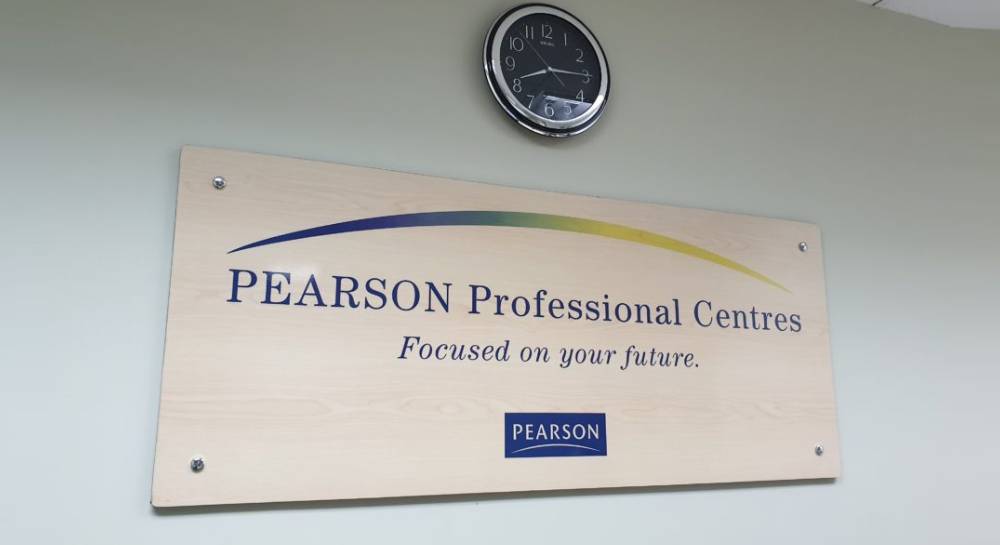
To get to the test center by BTS please alight at E4 Asoke station, walk 500 meters to the Asoke Road (Soi Sukhumvit 21), continue walking down the Asoke Road until you reach the BB Building (Emirates Building), next to the GMM Grammy Building. The center is located at Pearson Education Indochina on the 10th floor, Suite 1010.

From the MRTA Sukhumvit Station

To get to the test center by MRTA please alight at Sukhumvit Station walk to the Askoe Road (Soi Sukhumvit 21), continue walking down the Asoke Road until you reach the BB Building (Emirates Building), next to the GMM Grammy Building. The center is located at Pearson Education Indochina on the 10th floor, Suite 1010.

From the MRTA Phetchaburi Station

To get to the test center by MRTA please alight at Phetchaburi Station walk to the corner of Asoke and Phetchaburi road and continue walking along the Asoke Road (Soi 21) until you reach the BB Building (Emirates Building), next to the Q-House Building. The center is located at Pearson Education Indochina on the 10th floor, Suite 1010.

Transition Timeline

There will be a period of overlap where scheduling and testing will be available with both Prometric and Pearson VUE. Most candidates who have already scheduled their exams will be unaffected by this change.

Important Dates
1 March 2019 PMI-ACP scheduling available at Pearson VUE
1 April 2019 PMI-ACP testing begins at Pearson VUE centers and online proctoring
1 April 2019 Scheduling available at Pearson VUE for PMP®, PgMP®, PfMP®, PMI-PBA®, PMI-SP® and PMI-RMP® exams
30 June 2019 Last date for testing at Prometric centers
1 July 2019 Testing begins at Pearson VUE centers for PMP, PgMP, PfMP, PMI-PBA, PMI-SP and PMI-RMP exams

[wooma-template id=”2709″]